
 Quick Overview
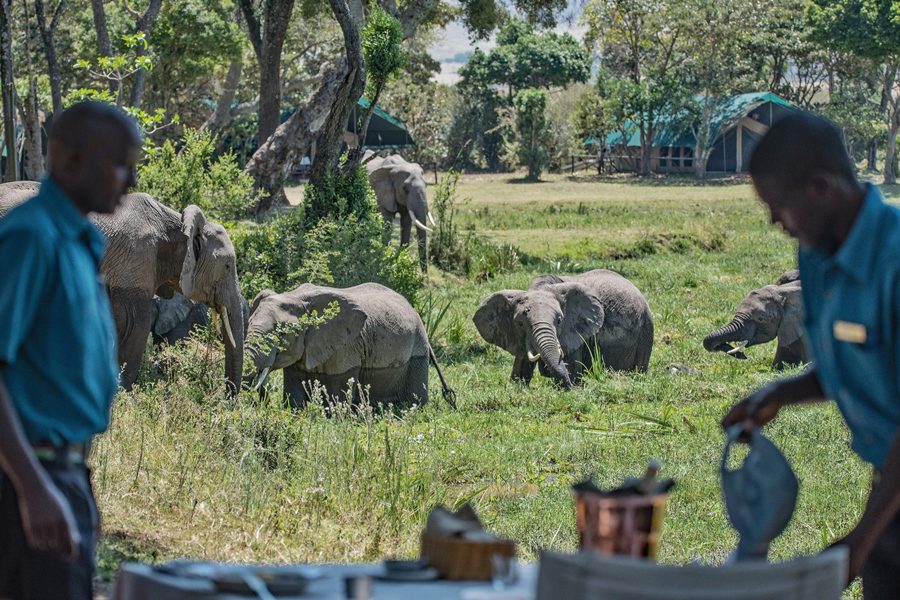
Elephants at Governors’ Camp, Masai Mara.
With its mild climate and incredible biodiversity, Kenya is an excellent destination for year-round wildlife viewing. However, there are two rainy seasons (referred to as the Green Season) that might impact your Kenya wildlife safari:
Quick Overview
Elephants at Governors’ Camp, Masai Mara.
With its mild climate and incredible biodiversity, Kenya is an excellent destination for year-round wildlife viewing. However, there are two rainy seasons (referred to as the Green Season) that might impact your Kenya wildlife safari:
- April to May (the ‘long rains’): Characterized by heavy downpours that flood rivers and transform dirt roads into thick mud. During this time, some lodges and camps may temporarily close.
- November to December (the ‘short rains’): Brief, afternoon thunderstorms that are usually short-lived. Game viewing remains exceptional, photography conditions are outstanding, and there are fewer tourists. Explore our guide to learn more about Green Season safaris.
What Animals Will You See on a Wildlife Safari in Kenya?
1. Buffalo
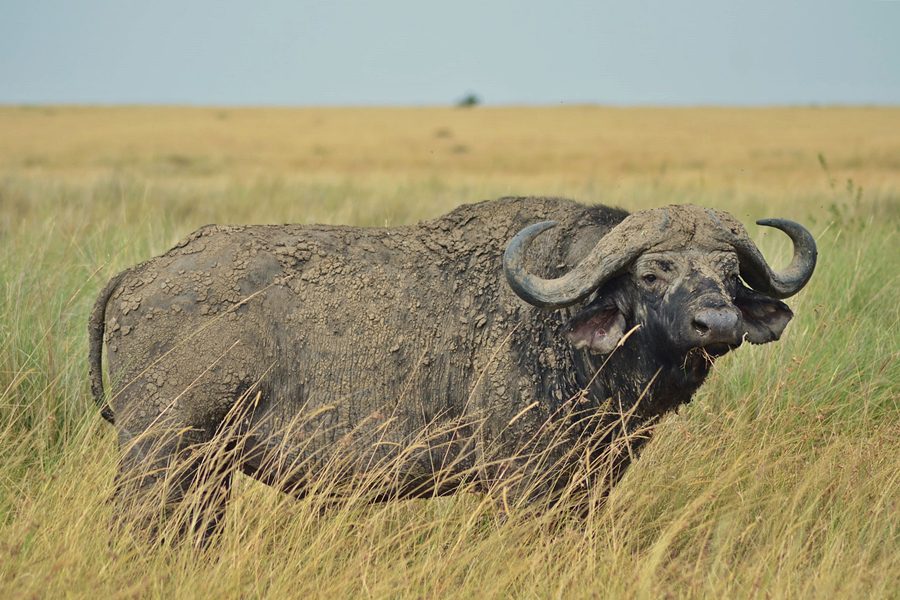 Buffalo in Masai Mara, Kenya.
The Cape buffalo is the most temperamental member of the Big Five and is widely considered one of the most dangerous animals in Africa. Known for its unpredictable nature and immense strength, the buffalo has few natural predators, apart from lions and large crocodiles.
Where Can You See Buffalo in Kenya?
Despite being one of Africa’s most voracious grazers, the buffalo is not particularly picky about its habitat. However, it relies heavily on perennial water sources to satisfy its considerable thirst.
Key areas to spot buffalo in Kenya include the Masai Mara, Amboseli National Park, and Meru National Park, the latter of which boasts some of the largest buffalo herds you’ll encounter on a Kenya wildlife safari.
Buffalo in Masai Mara, Kenya.
The Cape buffalo is the most temperamental member of the Big Five and is widely considered one of the most dangerous animals in Africa. Known for its unpredictable nature and immense strength, the buffalo has few natural predators, apart from lions and large crocodiles.
Where Can You See Buffalo in Kenya?
Despite being one of Africa’s most voracious grazers, the buffalo is not particularly picky about its habitat. However, it relies heavily on perennial water sources to satisfy its considerable thirst.
Key areas to spot buffalo in Kenya include the Masai Mara, Amboseli National Park, and Meru National Park, the latter of which boasts some of the largest buffalo herds you’ll encounter on a Kenya wildlife safari.
2. Cheetah
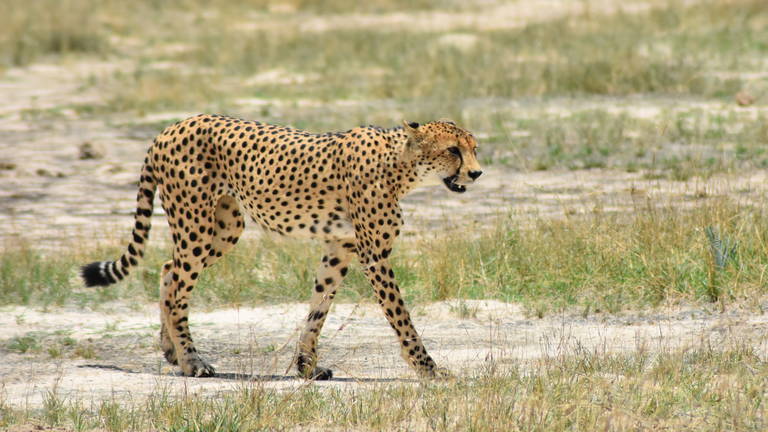 Cheetah scanning the Masai Mara wildlife.
As the fastest land mammal on Earth, capable of reaching speeds over 100 km/h (60 mph), cheetahs thrive in flat, open spaces that allow them to chase down prey effectively. Witnessing a cheetah hunt is one of the most thrilling experiences you can have on a wildlife safari in Kenya.
Where Can You See Cheetahs in Kenya?
The Masai Mara’s expansive, treeless plains are ideal hunting grounds for cheetahs. Additionally, the landscape is dotted with termite mounds that serve as lookout points—perfect for these stealthy predators to survey their surroundings and spot potential prey.
Cheetah scanning the Masai Mara wildlife.
As the fastest land mammal on Earth, capable of reaching speeds over 100 km/h (60 mph), cheetahs thrive in flat, open spaces that allow them to chase down prey effectively. Witnessing a cheetah hunt is one of the most thrilling experiences you can have on a wildlife safari in Kenya.
Where Can You See Cheetahs in Kenya?
The Masai Mara’s expansive, treeless plains are ideal hunting grounds for cheetahs. Additionally, the landscape is dotted with termite mounds that serve as lookout points—perfect for these stealthy predators to survey their surroundings and spot potential prey.
3. Crocodile
 Crocodile basking in the sun in Kenya.
The Nile crocodile is widespread across Kenya, thriving in aquatic habitats such as lakes, rivers, swamps, and marshlands. An adult male can grow to an impressive size, reaching up to five meters (16 feet) in length and weighing as much as 750 kilograms (1,650 pounds).
As Africa’s largest freshwater predator, the Nile crocodile is capable of taking down nearly any animal within its territory. These apex predators are opportunistic feeders, preying on fish, reptiles, birds, and mammals. Each year in August, about a million wildebeest cross the Mara River as part of the Great Migration, providing Nile crocodiles with an annual feast during this dramatic natural spectacle.
Where Can You See Crocodiles in Kenya?
Crocodile basking in the sun in Kenya.
The Nile crocodile is widespread across Kenya, thriving in aquatic habitats such as lakes, rivers, swamps, and marshlands. An adult male can grow to an impressive size, reaching up to five meters (16 feet) in length and weighing as much as 750 kilograms (1,650 pounds).
As Africa’s largest freshwater predator, the Nile crocodile is capable of taking down nearly any animal within its territory. These apex predators are opportunistic feeders, preying on fish, reptiles, birds, and mammals. Each year in August, about a million wildebeest cross the Mara River as part of the Great Migration, providing Nile crocodiles with an annual feast during this dramatic natural spectacle.
Where Can You See Crocodiles in Kenya?
- Masai Mara
- Amboseli National Park
- Meru National Park
4. Elephant
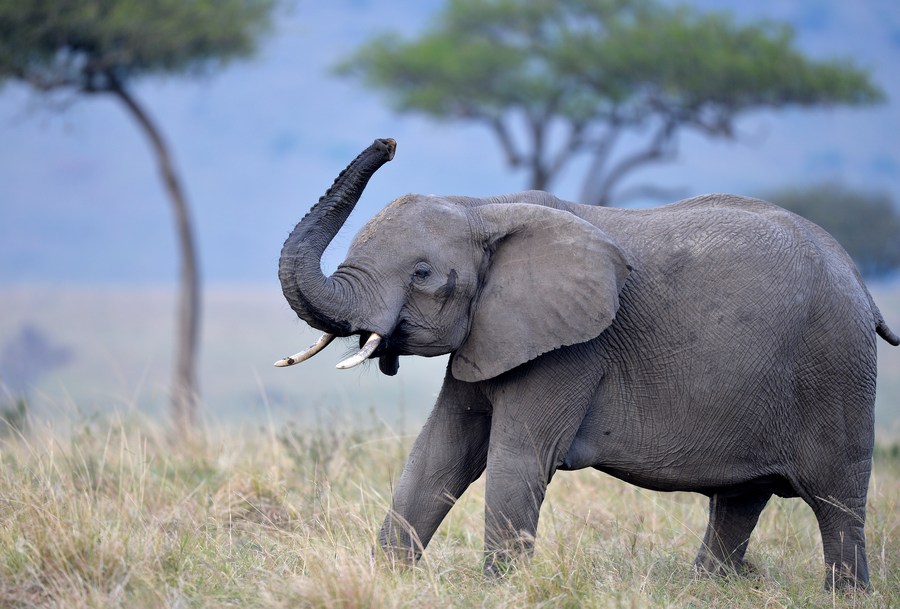 Elephants enjoying the wetlands of Amboseli.
Elephants are plentiful across Kenya’s wildlife parks (with the exception of Lake Nakuru). For those seeking to witness some of East Africa’s largest herds and most impressive tusks, Amboseli National Park is the place to go. Here, majestic herds of elephants gather to graze and drink from the park’s perennial swamps and lakes.
On clear days, Amboseli offers stunning views of Mount Kilimanjaro, providing a breathtaking backdrop for wildlife viewing, including these gentle giants.
Where Can You See Elephants in Kenya?
Elephants enjoying the wetlands of Amboseli.
Elephants are plentiful across Kenya’s wildlife parks (with the exception of Lake Nakuru). For those seeking to witness some of East Africa’s largest herds and most impressive tusks, Amboseli National Park is the place to go. Here, majestic herds of elephants gather to graze and drink from the park’s perennial swamps and lakes.
On clear days, Amboseli offers stunning views of Mount Kilimanjaro, providing a breathtaking backdrop for wildlife viewing, including these gentle giants.
Where Can You See Elephants in Kenya?
- Amboseli National Park
- Masai Mara
- Samburu National Reserve
- Meru National Park
- Laikipia
5. Giraffe
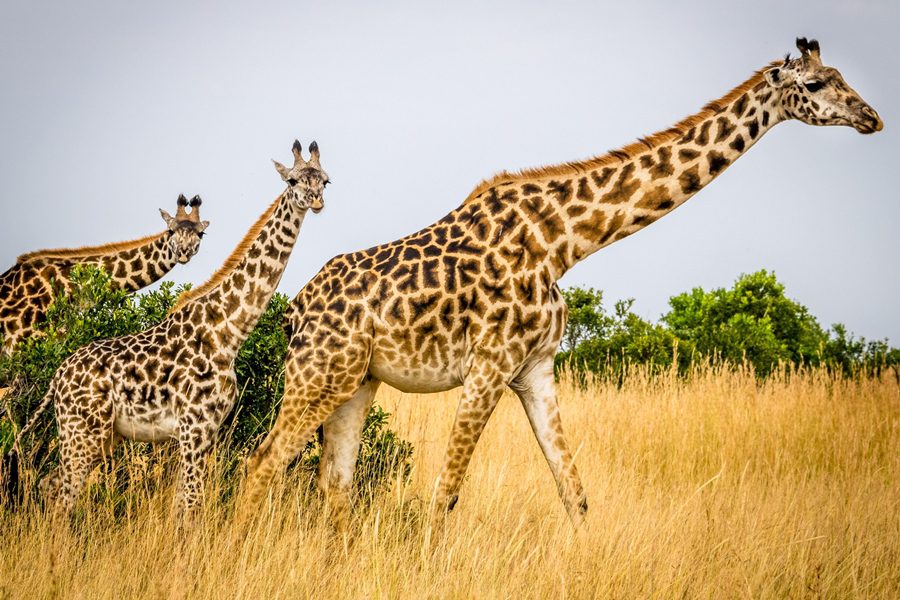 Giraffe roaming the Masai Mara.
Giraffes are a common and beloved sight across Kenya, captivating safari-goers with their graceful movements and towering stature. Watching the world’s tallest land animal awkwardly assume a wide-legged stance to drink water is an unforgettable safari highlight.
Where Can You See Giraffes in Kenya?
Kenya is home to several subspecies of giraffe, each found in different regions:
Giraffe roaming the Masai Mara.
Giraffes are a common and beloved sight across Kenya, captivating safari-goers with their graceful movements and towering stature. Watching the world’s tallest land animal awkwardly assume a wide-legged stance to drink water is an unforgettable safari highlight.
Where Can You See Giraffes in Kenya?
Kenya is home to several subspecies of giraffe, each found in different regions:
- Rothschild’s Giraffe (one of the most endangered): Visit The Giraffe Centre or stay at Giraffe Manor in Nairobi for up-close encounters. Lake Nakuru National Park is also a key stronghold for this subspecies.
- Reticulated Giraffe: Best viewed in Samburu National Reserve or Meru National Park.
- Masai Giraffe: Found abundantly in major parks like the Masai Mara and Amboseli.
6. Hippopotamus
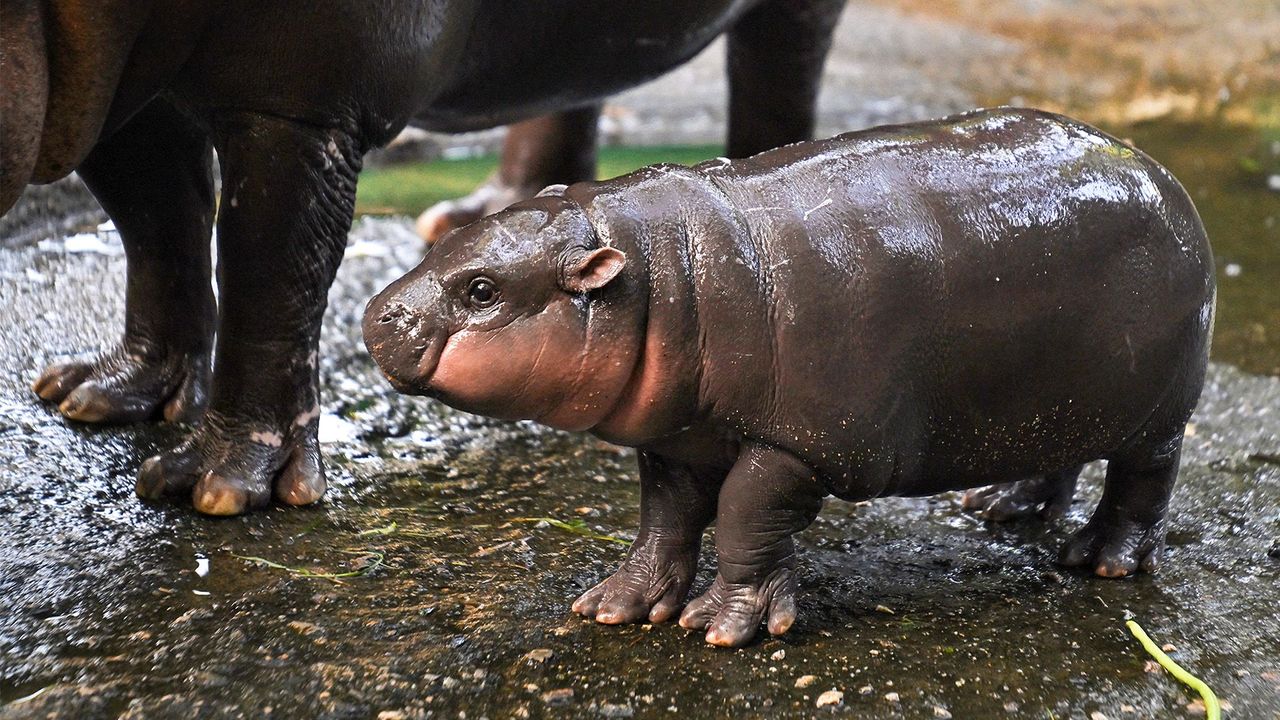 A charming moment in the Masai Mara.
The hippopotamus, whose name comes from the ancient Greek for “river horse,” is most commonly found in Kenya’s rivers, lakes, and swamps. Although its stocky build might resemble a pig, the hippo’s closest living relatives are cetaceans, including whales, dolphins, and porpoises.
Despite its somewhat comical appearance, the hippo is one of the world’s most dangerous animals due to its aggressive and unpredictable temperament. This is especially true when they leave the water at dusk to graze. If your safari lodge or camp is near a river or lake, you’ll likely be treated to the daily drama of territorial males, complete with their signature chortles.
Where Can You See Hippos in Kenya?
While hippos can be found around Kenya’s permanent water sources, the best spots to observe these fascinating creatures are:
A charming moment in the Masai Mara.
The hippopotamus, whose name comes from the ancient Greek for “river horse,” is most commonly found in Kenya’s rivers, lakes, and swamps. Although its stocky build might resemble a pig, the hippo’s closest living relatives are cetaceans, including whales, dolphins, and porpoises.
Despite its somewhat comical appearance, the hippo is one of the world’s most dangerous animals due to its aggressive and unpredictable temperament. This is especially true when they leave the water at dusk to graze. If your safari lodge or camp is near a river or lake, you’ll likely be treated to the daily drama of territorial males, complete with their signature chortles.
Where Can You See Hippos in Kenya?
While hippos can be found around Kenya’s permanent water sources, the best spots to observe these fascinating creatures are:
- Amboseli National Park’s swamps and lakes
- The Masai Mara’s Talek and Mara Rivers
- Meru National Park’s streams and rivers
- Lake Nakuru National Park
7. Hyena
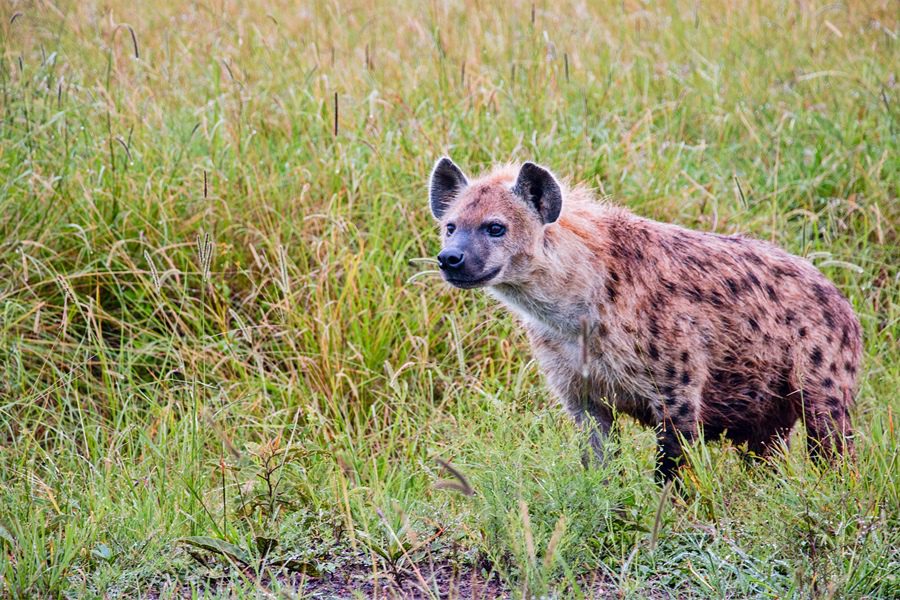 Hyena in the Masai Mara.
Eternal opportunists, hyenas are rarely far from a predator’s kill. With perfect timing, these “laughing” scavengers are known to snatch meat from predators like lions and cheetahs. Though often unfairly maligned for their savage behavior and less-than-charming appearance, hyenas play a crucial ecological role alongside vultures and jackals by consuming carrion – nature’s ultimate recyclers.
On a Kenya wildlife safari, you’re likely to hear the distant, whooping calls of spotted hyenas as you fall asleep. These animals are very common in Kenya and can be found wherever there is sufficient plains game to sustain predators.
Where Can You See Hyenas in Kenya?
Hyena in the Masai Mara.
Eternal opportunists, hyenas are rarely far from a predator’s kill. With perfect timing, these “laughing” scavengers are known to snatch meat from predators like lions and cheetahs. Though often unfairly maligned for their savage behavior and less-than-charming appearance, hyenas play a crucial ecological role alongside vultures and jackals by consuming carrion – nature’s ultimate recyclers.
On a Kenya wildlife safari, you’re likely to hear the distant, whooping calls of spotted hyenas as you fall asleep. These animals are very common in Kenya and can be found wherever there is sufficient plains game to sustain predators.
Where Can You See Hyenas in Kenya?
- Masai Mara
- Amboseli National Park
- Meru National Park
8. Leopard
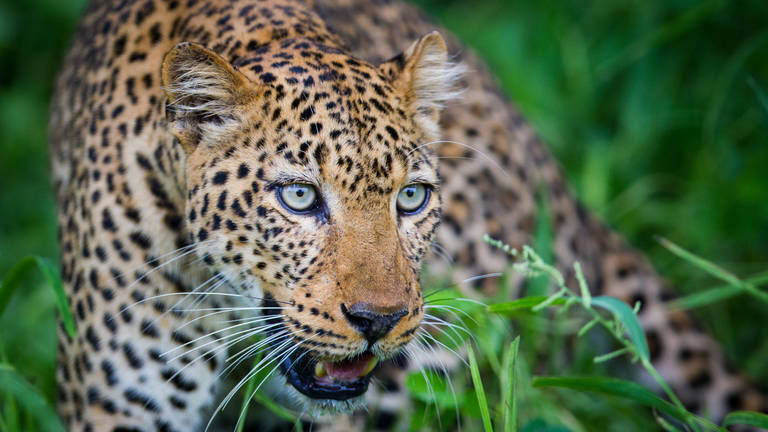 Leopard in Samburu.
Elusive and solitary, encountering Panthera pardus on a Kenya wildlife safari is a moment you’ll never forget. Renowned for its mastery of camouflage and stealth, the leopard is one of the most sought-after sightings on any safari. Its sleek, muscular elegance and stunning, patterned coat have captivated humans for centuries, earning it an almost mythical allure. Watching this predator move is like witnessing liquid gold come to life.
Where Can You See Leopards in Kenya?
Spotting a leopard often requires patience, persistence, and a bit of luck. The best chances of encountering this secretive member of the Big Five are in the Masai Mara or Samburu National Reserves.
Leopard in Samburu.
Elusive and solitary, encountering Panthera pardus on a Kenya wildlife safari is a moment you’ll never forget. Renowned for its mastery of camouflage and stealth, the leopard is one of the most sought-after sightings on any safari. Its sleek, muscular elegance and stunning, patterned coat have captivated humans for centuries, earning it an almost mythical allure. Watching this predator move is like witnessing liquid gold come to life.
Where Can You See Leopards in Kenya?
Spotting a leopard often requires patience, persistence, and a bit of luck. The best chances of encountering this secretive member of the Big Five are in the Masai Mara or Samburu National Reserves.
- Samburu National Reserve: This reserve, with its arid woodlands, rocky outcrops, and dense riverine vegetation, is arguably the best place in Kenya to see leopards.
- Masai Mara: While much of the Mara consists of open grasslands more suited to cheetahs, lions, and hyenas, its rivers and surrounding vegetation provide ideal leopard habitats.
9. Lion
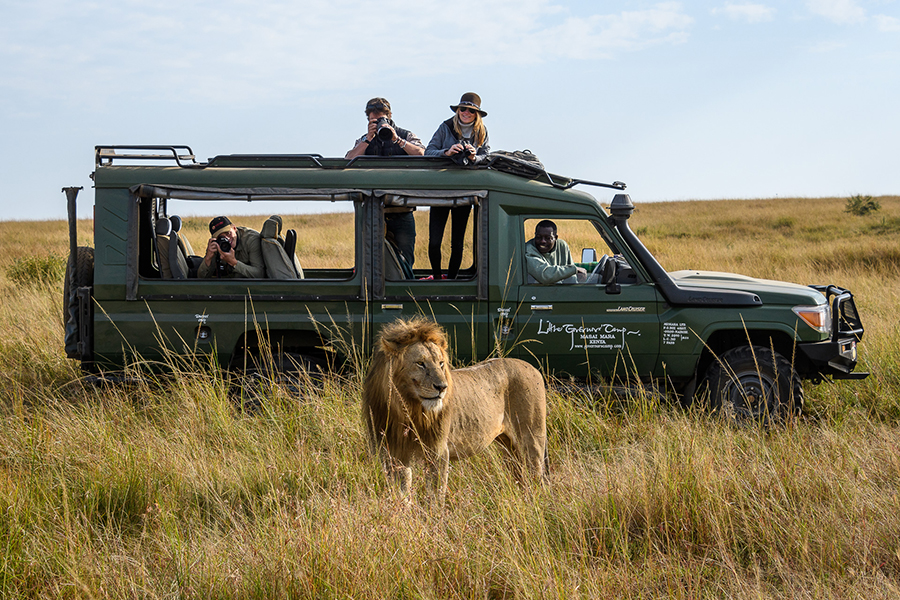 Tracking lions in the Masai Mara with Little Governors’ Camp.
Panthera leo—the undisputed king of the African wilderness. Witnessing lions during a Kenya wildlife safari is nothing short of exhilarating and evokes a deep, primal fascination. The first thing you’ll notice about this iconic member of the Big Five is its sheer size. Their powerful, barrel-chested frames, regal profiles, and thunderous roars are unforgettable reminders of their dominance in the wild.
As Africa’s most formidable predators, lions hunt large prey like zebras, buffalo, giraffes, hippos, and even young elephants. Observing lionesses as they coordinate a hunt is an adrenaline-pumping spectacle that will stay with you forever.
Where Can You See Lions in Kenya?
The Masai Mara is renowned for its thriving lion population and was famously featured in the BBC’s Big Cat Diary documentary series. This makes it one of the best places in the world to see large lion prides year-round.
For a unique experience, visit Lake Nakuru National Park, where you may spot the rare tree-climbing lions. While lions are not naturally adapted to tree climbing, some have been observed scaling branches, likely to escape biting insects or enjoy a cooling breeze. Consider yourself fortunate if you witness this uncommon behavior!
Tracking lions in the Masai Mara with Little Governors’ Camp.
Panthera leo—the undisputed king of the African wilderness. Witnessing lions during a Kenya wildlife safari is nothing short of exhilarating and evokes a deep, primal fascination. The first thing you’ll notice about this iconic member of the Big Five is its sheer size. Their powerful, barrel-chested frames, regal profiles, and thunderous roars are unforgettable reminders of their dominance in the wild.
As Africa’s most formidable predators, lions hunt large prey like zebras, buffalo, giraffes, hippos, and even young elephants. Observing lionesses as they coordinate a hunt is an adrenaline-pumping spectacle that will stay with you forever.
Where Can You See Lions in Kenya?
The Masai Mara is renowned for its thriving lion population and was famously featured in the BBC’s Big Cat Diary documentary series. This makes it one of the best places in the world to see large lion prides year-round.
For a unique experience, visit Lake Nakuru National Park, where you may spot the rare tree-climbing lions. While lions are not naturally adapted to tree climbing, some have been observed scaling branches, likely to escape biting insects or enjoy a cooling breeze. Consider yourself fortunate if you witness this uncommon behavior!
10. Rhinoceros
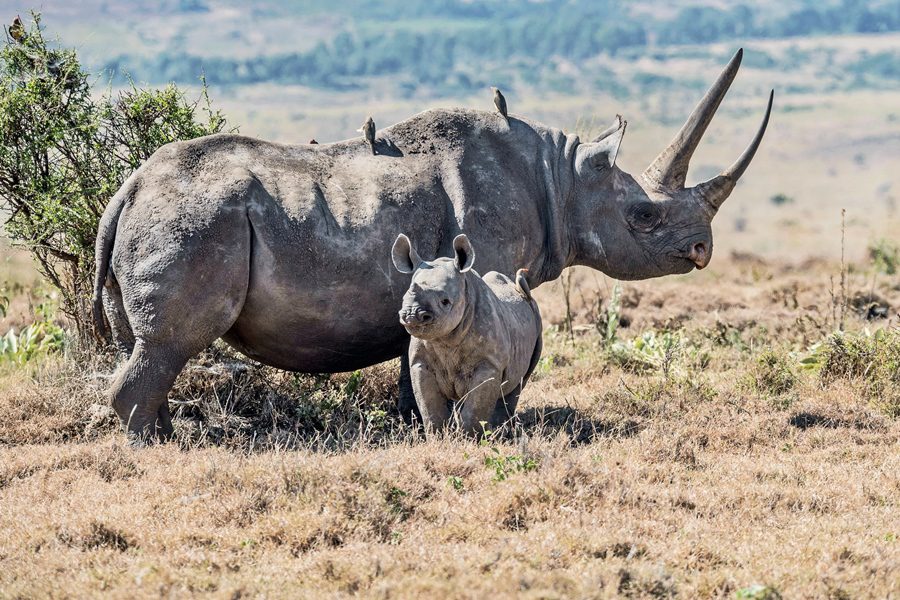
Black rhino in Laikipia.
Rhinos, an integral part of the Big Five, are increasingly challenging to spot in Kenya. These majestic creatures have faced immense threats over the last century, with their population plummeting to critical lows due to poaching.
By the 1980s, Kenya’s black rhino numbers had dwindled to fewer than 300 individuals. However, ongoing conservation initiatives in places like Lewa and Ol Pejeta Conservancies have helped their numbers rebound steadily, although the species remains critically endangered.
Where Can You See Rhinos in Kenya?
For the best chance to see rhinos during your Kenya wildlife safari, visit:
- Lake Nakuru National Park – a sanctuary for both black and white rhinos.
- Lewa Wildlife Conservancy – a secure haven dedicated to black rhino conservation.
- Ol Pejeta Conservancy – home to the last two remaining northern white rhinos on Earth, alongside a significant population of black rhinos.
11. Wild Dog
 Wild dog pups in Samburu.
The sight of a wild dog pack, also known as painted wolves, is an unforgettable highlight of any safari. These rare and endangered canids are threatened by habitat loss, human-wildlife conflict, and diseases like rabies and canine distemper. Despite these challenges, wild dogs are fascinating predators, showcasing exceptional teamwork, sharp intelligence, acute hearing, strong vision, and incredible speed.
Hearing your guide announce a wild dog sighting is an electrifying moment that ignites excitement among all safari-goers.
Where Can You See Wild Dogs in Kenya?
Wild dog populations are steadily growing in Samburu and the Laikipia region. Laikipia, in particular, has become the second most important stronghold for wild dogs in Africa, after Botswana. This makes both regions prime locations to spot these elusive predators during your Kenya wildlife safari.
Wild dog pups in Samburu.
The sight of a wild dog pack, also known as painted wolves, is an unforgettable highlight of any safari. These rare and endangered canids are threatened by habitat loss, human-wildlife conflict, and diseases like rabies and canine distemper. Despite these challenges, wild dogs are fascinating predators, showcasing exceptional teamwork, sharp intelligence, acute hearing, strong vision, and incredible speed.
Hearing your guide announce a wild dog sighting is an electrifying moment that ignites excitement among all safari-goers.
Where Can You See Wild Dogs in Kenya?
Wild dog populations are steadily growing in Samburu and the Laikipia region. Laikipia, in particular, has become the second most important stronghold for wild dogs in Africa, after Botswana. This makes both regions prime locations to spot these elusive predators during your Kenya wildlife safari.
12. Wildebeest
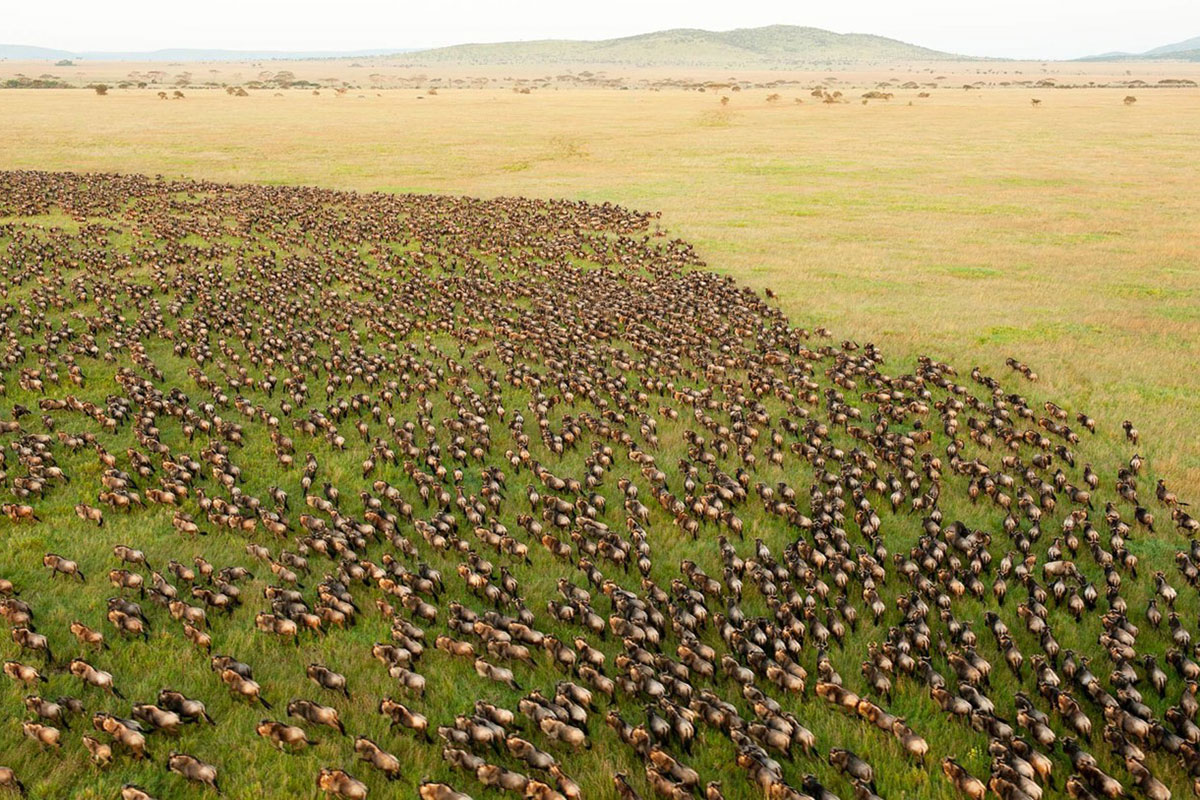
Wildebeest mega-herd in the Masai Mara.
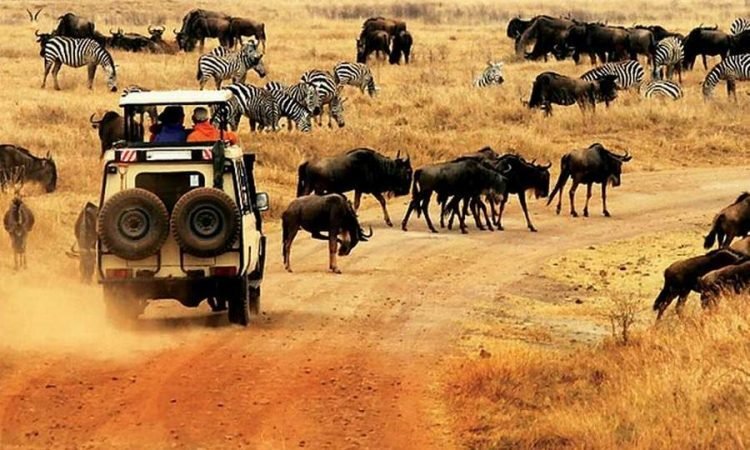
While wildebeest are plentiful across most of Kenya’s wildlife parks, the Great Wildebeest Migration between July and November is a spectacle like no other. During this period, nearly a million wildebeest gather in the Masai Mara in what is widely regarded as the greatest wildlife show on Earth.
The pinnacle of this migration occurs in August, with thrilling river crossings as the wildebeest move from the Serengeti into the Mara. This is also the peak time for Kenya wildlife safaris, and the Masai Mara can become quite crowded. To avoid the hustle while still being close to the action, consider staying in one of the private conservancies bordering the Masai Mara National Reserve.
Where Can You See Wildebeest in Kenya?
Wildebeest are common in many of Kenya’s parks, including:
- Masai Mara – particularly during the Great Migration.
- Amboseli National Park
- Meru National Park
13. Zebra
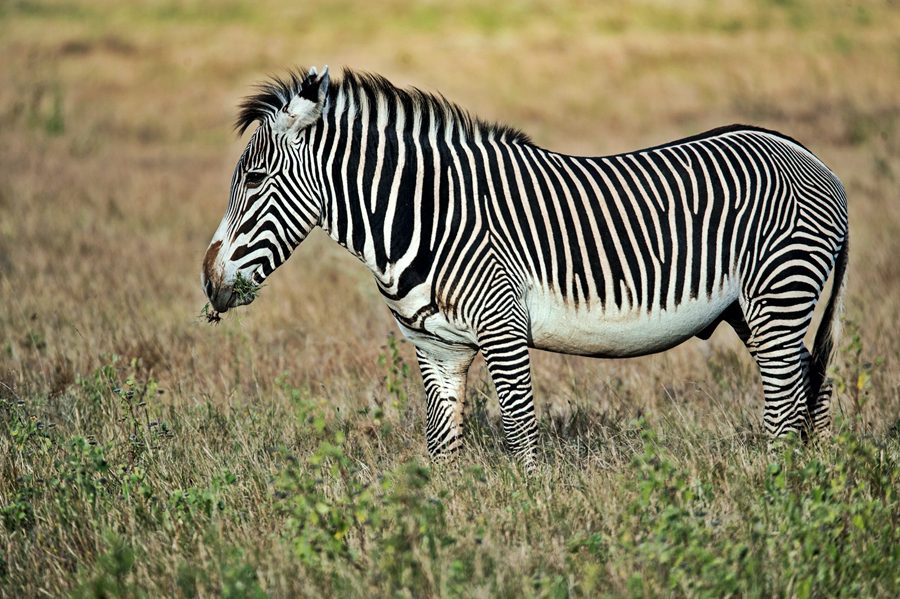 Grevy’s zebra in Laikipia.
Zebras, with their striking black and white stripes, are widespread across Kenya and thrive in diverse habitats such as savannahs, grasslands, woodlands, shrublands, and even mountainous areas. While zebras are commonly found in many of Kenya’s wildlife reserves, several hundred thousand join the Great Wildebeest Migration as they move into the Masai Mara from around July each year.
Where Can You See Zebras in Kenya?
Kenya is home to two primary subspecies of zebra:
Grevy’s zebra in Laikipia.
Zebras, with their striking black and white stripes, are widespread across Kenya and thrive in diverse habitats such as savannahs, grasslands, woodlands, shrublands, and even mountainous areas. While zebras are commonly found in many of Kenya’s wildlife reserves, several hundred thousand join the Great Wildebeest Migration as they move into the Masai Mara from around July each year.
Where Can You See Zebras in Kenya?
Kenya is home to two primary subspecies of zebra:
- Common plains zebra – abundant in nearly all of Kenya’s wildlife parks.
- Grevy’s zebra – the largest living wild equid and the most endangered zebra species. The Samburu National Reserve and Laikipia region are prime locations to see these magnificent animals during your Kenya safari.
14. Rarities
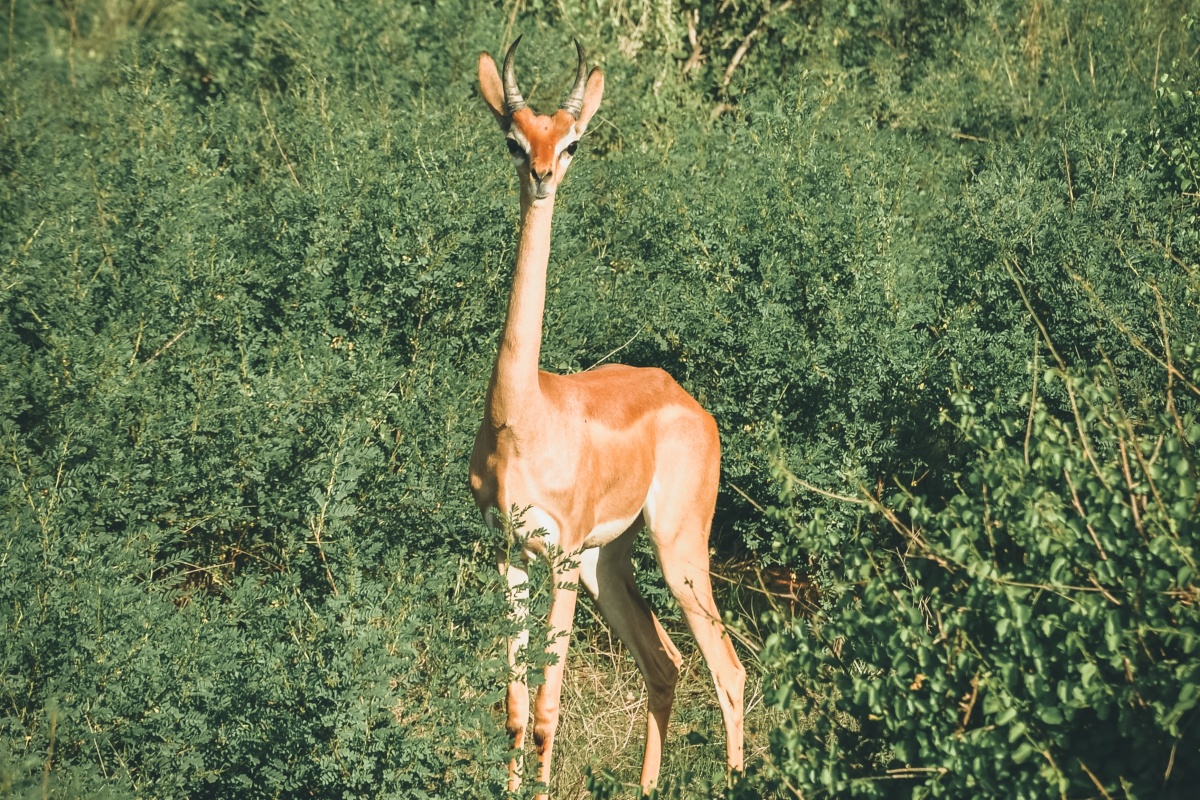
Gerenuk in Samburu.
While many are familiar with the Big Five and perhaps the Little Five (elephant shrew, ant lion, rhinoceros beetle, buffalo weaver, and leopard tortoise), have you heard of the Samburu Special 5?
Located in northern Kenya, Samburu National Reserve is a stunning area where the lush greenery of the country’s southern regions gives way to arid scrublands and impressive rocky outcrops. This unique landscape is home to species specially adapted to its drier, more rugged conditions. The highlights of this off-the-beaten-path safari destination include:
- Gerenuk (also known as the giraffe gazelle)
- Somali ostrich
- Grevy’s zebra
- Reticulated giraffe
- Beisa oryx