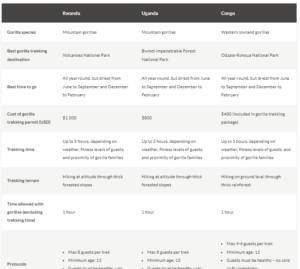
 But where can you find the best places to see gorillas in the wild? Drawing on our first-hand trekking experiences in some of the continent’s most remote destinations, we’ve crafted a comprehensive guide to the top locations for gorilla sightings in Africa:
Overview: Rwanda vs Uganda vs Congo
Uganda
On our list of the best places to go on safari in Africa, Uganda’s gorilla trekking experiences stand out as truly unforgettable. Mountain gorillas can only survive in their natural environment, making trekking into their native forests—such as Uganda’s Bwindi Impenetrable Forest—your sole opportunity to see these magnificent creatures in the wild. To protect their health and safety, strict regulations, like Uganda’s gorilla trekking permit requirements, are in place. Daily visits to each gorilla group are highly limited, so we recommend booking your Uganda gorilla trekking trip about a year in advance. The good news? Uganda’s trekking permits are among the most affordable, making it an excellent destination for budget-conscious travelers seeking to see gorillas in Africa.Where to See Gorillas in Uganda
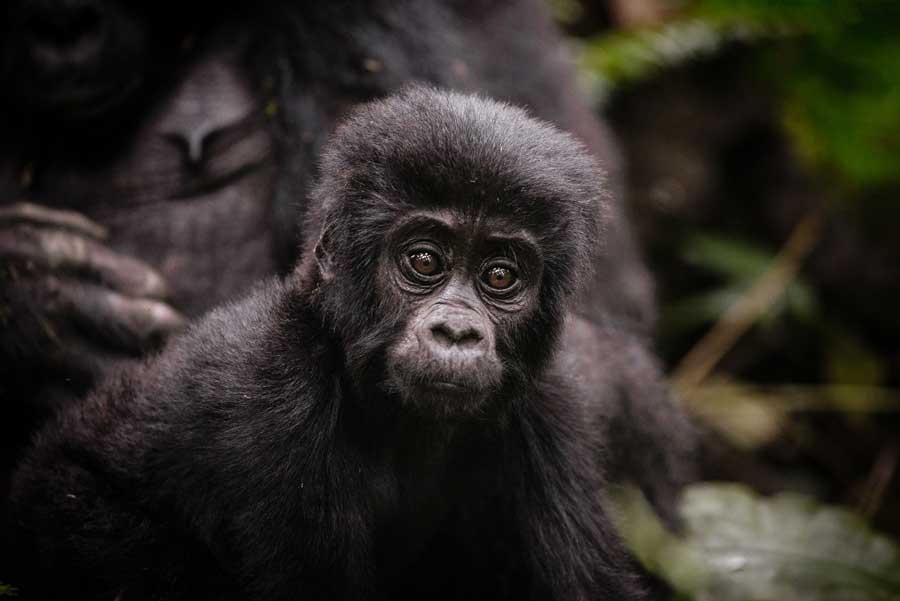 Uganda’s mountain gorillas inhabit the aptly named Bwindi Impenetrable Forest National Park, a lush expanse of tangled greenery blanketing the country’s southwestern mountains. Reaching Bwindi requires some effort: it’s either a day-long drive (approximately 10 to 11 hours) from the capital, Kampala, or a quicker but costlier charter flight. While the journey may be more challenging than visiting Rwanda, the reward is well worth it!
Bwindi is a UNESCO World Heritage Site that features a rich blend of montane and lowland forest, offering a thriving habitat for around 120 mammal species, 350 bird species, 220 butterfly species, and numerous reptiles and amphibians. Thanks to revenue from tourism, the population of endangered mountain gorillas in the park has seen encouraging growth, now comprising nearly half of the world’s total.
Additionally, Bwindi provides incredible opportunities to encounter other primates, such as colobus monkeys and chimpanzees, making your Uganda gorilla trekking adventure even more enriching.
Uganda’s mountain gorillas inhabit the aptly named Bwindi Impenetrable Forest National Park, a lush expanse of tangled greenery blanketing the country’s southwestern mountains. Reaching Bwindi requires some effort: it’s either a day-long drive (approximately 10 to 11 hours) from the capital, Kampala, or a quicker but costlier charter flight. While the journey may be more challenging than visiting Rwanda, the reward is well worth it!
Bwindi is a UNESCO World Heritage Site that features a rich blend of montane and lowland forest, offering a thriving habitat for around 120 mammal species, 350 bird species, 220 butterfly species, and numerous reptiles and amphibians. Thanks to revenue from tourism, the population of endangered mountain gorillas in the park has seen encouraging growth, now comprising nearly half of the world’s total.
Additionally, Bwindi provides incredible opportunities to encounter other primates, such as colobus monkeys and chimpanzees, making your Uganda gorilla trekking adventure even more enriching.
When to Go: Best Time to See Gorillas in Uganda
Uganda experiences two dry and two wet seasons each year. While a gorilla trekking expedition in Uganda is a year-round activity, most visitors prefer the drier months of June to September and December to February, as these months offer more favorable trekking conditions. For budget-conscious travelers, the low seasons (March to May and October to November) present a fantastic opportunity. During these periods, Uganda’s parks are less crowded, and accommodation is more affordable, making it an ideal time to plan a cost-effective gorilla trekking adventure.Gorilla Trekking Permits
The cost of a gorilla trekking permit in Uganda is $600 USD per person, allowing you to spend one hour observing these incredible creatures in their natural habitat. Alternatively, you can opt for a gorilla habituation permit at $1,500 USD, which offers a more immersive experience. With this permit, you’ll join researchers and spend up to four hours with the gorillas in the wild, providing a deeper understanding of their behavior and environment.Traveller Types: Best For…
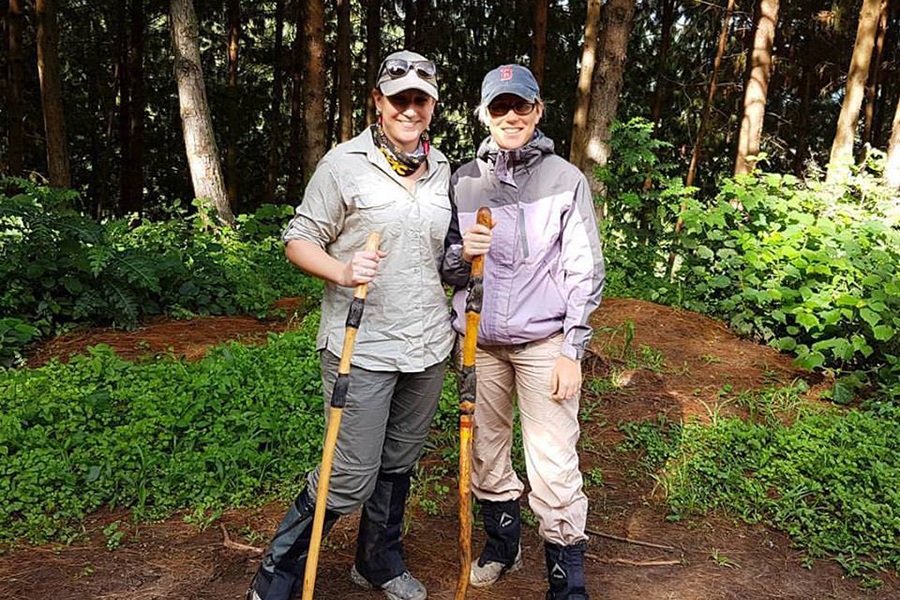 Uganda provides animal enthusiasts with the perfect opportunity to combine a gorilla trekking expedition with a safari in one of Africa’s emerging safari destinations. Thanks to the country’s affordable trekking permits, Uganda is an excellent choice for travelers seeking budget-friendly options to experience gorillas in Africa.
Other Wildlife Experiences
Bwindi’s standout feature is the flexibility to customize your itinerary by including nearby Kibale National Park and Queen Elizabeth National Park. This allows you to enhance your Uganda gorilla trekking adventure with unforgettable experiences such as chimpanzee trekking and big game viewing, creating a diverse and enriching wildlife journey.Rwanda
Rwanda, though small, delivers an unparalleled gorilla trekking experience complemented by its breathtaking natural beauty. The country’s flagship reserve, Volcanoes National Park, is conveniently located just 80 kilometres (50 miles) – roughly a three-hour drive – from Kigali International Airport, making it the most accessible destination for gorilla trekking in Africa.Where to See Gorillas in Rwanda
 Nestled in northwestern Rwanda, Volcanoes National Park spans 160 square kilometres (62 square miles) of pristine rainforest, encompassing five of the eight volcanoes in the Virunga Mountains range. This enchanting landscape offers the perfect backdrop for immersive gorilla conservation experiences.
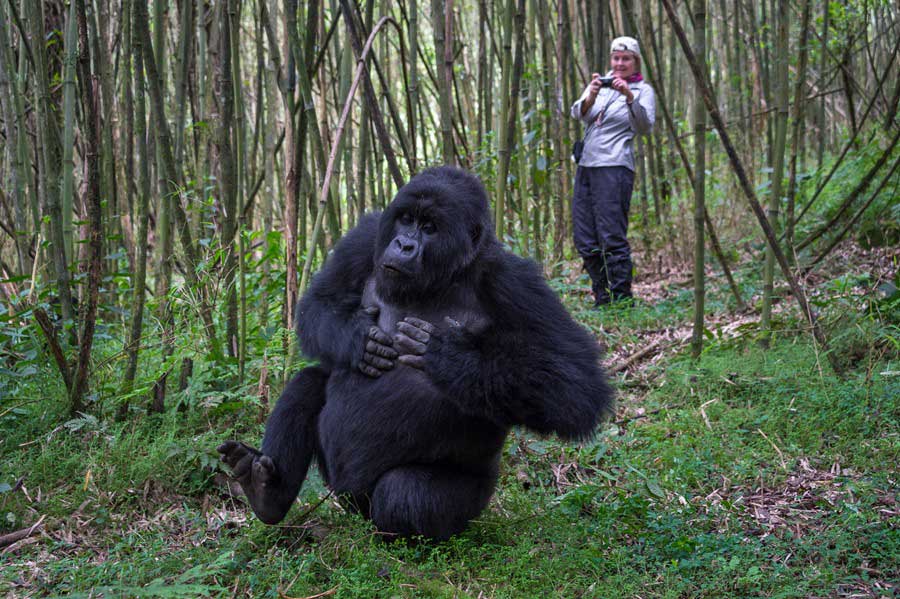
Mountain gorillas, critically endangered and highly sociable, spend most of their waking hours foraging on the forest floor, moving less than 1 kilometre (0.6 miles) daily—making them relatively easy to track. Guided by an experienced tracker, you’ll journey through the park’s towering African redwoods, bamboo groves, tangled vines, and flowering lobelias to reach the location of your unforgettable face-to-face encounter with one of humanity’s closest relatives.
Volcanoes National Park is also steeped in history, having been the base for renowned primatologist Dian Fossey, making it the authentic “Gorillas in the Mist” country. Visitors can even visit Fossey’s grave to honor her legacy. Beyond gorillas, the park is home to a wealth of wildlife, including monkeys (such as the rare golden monkey) and an array of forest bird species.
At least 10% of tourism revenue is invested in community projects surrounding the park, ensuring that gorilla trekking in Rwanda has a tangible and meaningful impact on local communities. Conservation programs employ reformed poachers, providing them with legitimate income and reinforcing the protection of these majestic creatures.
Nestled in northwestern Rwanda, Volcanoes National Park spans 160 square kilometres (62 square miles) of pristine rainforest, encompassing five of the eight volcanoes in the Virunga Mountains range. This enchanting landscape offers the perfect backdrop for immersive gorilla conservation experiences.
Mountain gorillas, critically endangered and highly sociable, spend most of their waking hours foraging on the forest floor, moving less than 1 kilometre (0.6 miles) daily—making them relatively easy to track. Guided by an experienced tracker, you’ll journey through the park’s towering African redwoods, bamboo groves, tangled vines, and flowering lobelias to reach the location of your unforgettable face-to-face encounter with one of humanity’s closest relatives.
Volcanoes National Park is also steeped in history, having been the base for renowned primatologist Dian Fossey, making it the authentic “Gorillas in the Mist” country. Visitors can even visit Fossey’s grave to honor her legacy. Beyond gorillas, the park is home to a wealth of wildlife, including monkeys (such as the rare golden monkey) and an array of forest bird species.
At least 10% of tourism revenue is invested in community projects surrounding the park, ensuring that gorilla trekking in Rwanda has a tangible and meaningful impact on local communities. Conservation programs employ reformed poachers, providing them with legitimate income and reinforcing the protection of these majestic creatures.
When to Go: Best Time to See Gorillas in Rwanda
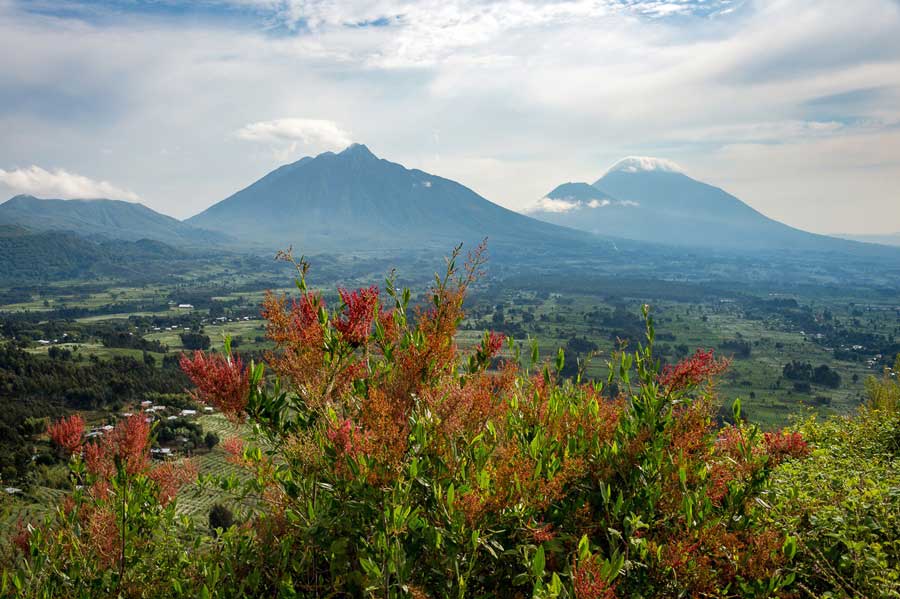 While gorilla trekking in Rwanda is considered a year-round activity, the country’s dry seasons provide the most favorable hiking conditions and the lowest risk of malaria.
Rwanda’s long rainy season runs from March to May, followed by the long dry season, which begins in June and lasts until mid-September. This period is the most popular and recommended time for gorilla trekking due to its easier trails and pleasant weather. The shorter rainy season occurs from October to November, followed by a brief dry season from December to February. This is also a good time to visit, although the humidity levels tend to be slightly higher compared to the June to September dry season.
While gorilla trekking in Rwanda is considered a year-round activity, the country’s dry seasons provide the most favorable hiking conditions and the lowest risk of malaria.
Rwanda’s long rainy season runs from March to May, followed by the long dry season, which begins in June and lasts until mid-September. This period is the most popular and recommended time for gorilla trekking due to its easier trails and pleasant weather. The shorter rainy season occurs from October to November, followed by a brief dry season from December to February. This is also a good time to visit, although the humidity levels tend to be slightly higher compared to the June to September dry season.
Gorilla Trekking Permits
A gorilla trekking permit in Rwanda costs $1,500 USD per person, allowing you to spend one unforgettable hour with the gorillas in their natural habitat. These permits are in high demand, particularly during the long dry season (June to September), and are often sold out up to a year in advance. To secure your trek, it’s best to book your trip as soon as you decide to go gorilla trekking in Rwanda.Traveller Types: Best For…
Rwanda is the ideal destination for travelers with limited time who want to experience gorilla trekking in Africa. Its accessibility makes it possible to land in Kigali, transfer to your lodge, trek the following day, and return to the airport the next morning—allowing you to complete your gorilla trekking trip in just five days or less.Other Wildlife Experiences
In addition to tracking gorillas, Rwanda offers the opportunity to encounter Africa’s iconic Big 5: elephant, buffalo, rhino, lion, and leopard. In 2015, lions were reintroduced to Akagera National Park, followed by Eastern black rhinos in 2017. These successful reintroduction programs have restored Akagera as a renowned Big 5 safari destination for the first time in nearly 20 years, giving visitors the chance to combine gorilla trekking with a classic African safari experience.Congo
 The Republic of the Congo is often mistaken for its larger neighbor, the Democratic Republic of the Congo (DRC), but these are two distinct countries in Africa. While the DRC spans a massive area, Congo is much more compact—yet it punches well above its weight when it comes to unique and rewarding gorilla trekking experiences.
Trekking for gorillas in Congo offers a distinct approach: from your camp, you can walk directly into the forest with your guide and begin your search for gorillas in the wild. In some cases, you may encounter them within an hour. This is quite different from the gorilla trekking experiences in Rwanda and Uganda, where you must first take a road transfer into the national park and then hike into mountainous terrain for two to five hours.
Congo’s flatter terrain and lower altitude make it warmer than its neighboring countries, offering a more comfortable trekking experience. Additionally, Congo allows for three consecutive days of gorilla trekking, giving visitors more time to observe and compare the personalities and dynamics of various gorilla families—something not possible in Rwanda or Uganda.
The Republic of the Congo is often mistaken for its larger neighbor, the Democratic Republic of the Congo (DRC), but these are two distinct countries in Africa. While the DRC spans a massive area, Congo is much more compact—yet it punches well above its weight when it comes to unique and rewarding gorilla trekking experiences.
Trekking for gorillas in Congo offers a distinct approach: from your camp, you can walk directly into the forest with your guide and begin your search for gorillas in the wild. In some cases, you may encounter them within an hour. This is quite different from the gorilla trekking experiences in Rwanda and Uganda, where you must first take a road transfer into the national park and then hike into mountainous terrain for two to five hours.
Congo’s flatter terrain and lower altitude make it warmer than its neighboring countries, offering a more comfortable trekking experience. Additionally, Congo allows for three consecutive days of gorilla trekking, giving visitors more time to observe and compare the personalities and dynamics of various gorilla families—something not possible in Rwanda or Uganda.
Where to See Gorillas in Congo
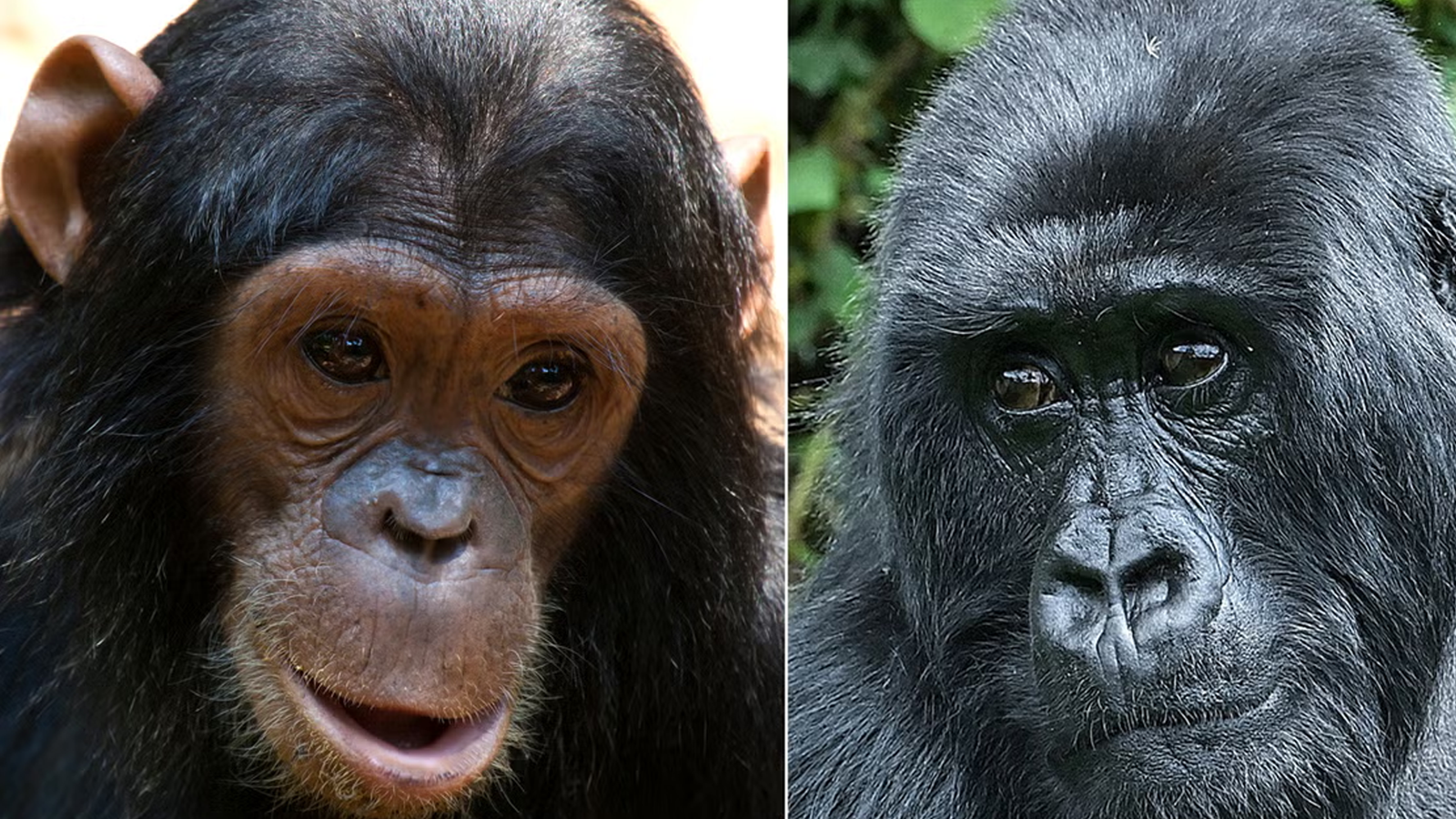
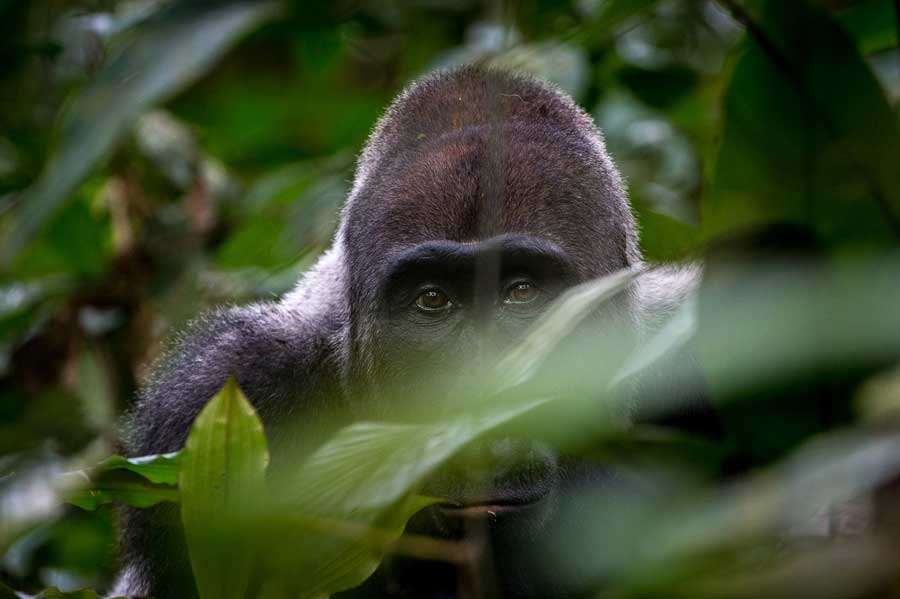
The Odzala-Kokoua National Park is a hidden gem, spanning 13,500 square kilometers (5,200 square miles) of pristine equatorial rainforest. It is home to about 100 mammal species and one of the most diverse primate populations in Africa. The park is especially celebrated for its thriving population of western lowland gorillas, making Congo the premier destination to see these incredible animals in the wild.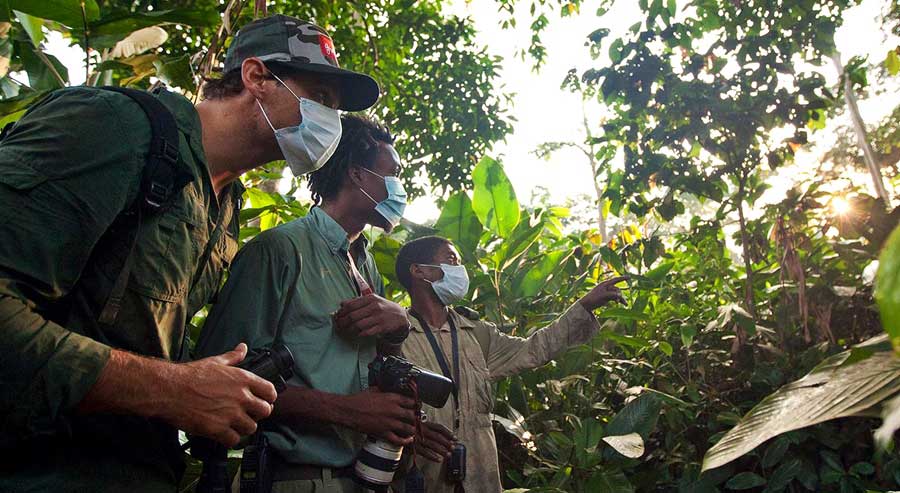 Unlike their mountain gorilla relatives in Rwanda and Uganda, western lowland gorillas are smaller, with softer fur, narrower faces, and rounder nostrils. Despite these differences, they are just as captivating and offer an equally profound wildlife encounter.
Trekking for gorillas in Congo provides the ultimate “Heart of Africa” experience. With expert guides leading the way, you’ll navigate dense forest paths adorned with dazzling butterflies, hear the calls of monkeys and tropical birds, and step ever closer to one of the most intimate and awe-inspiring wildlife encounters on Earth.
Unlike their mountain gorilla relatives in Rwanda and Uganda, western lowland gorillas are smaller, with softer fur, narrower faces, and rounder nostrils. Despite these differences, they are just as captivating and offer an equally profound wildlife encounter.
Trekking for gorillas in Congo provides the ultimate “Heart of Africa” experience. With expert guides leading the way, you’ll navigate dense forest paths adorned with dazzling butterflies, hear the calls of monkeys and tropical birds, and step ever closer to one of the most intimate and awe-inspiring wildlife encounters on Earth.
When to Go: Best Time to See Gorillas in Congo
Rain is a vital component of the Congo Basin’s equatorial rainforest, often referred to as Earth’s “green lungs.” As such, the seasons here can be best described as wet, wetter, and wettest. Gorilla trekking in Congo is most manageable during the ‘low rainfall’ season (June to September) and the ‘gentle rainfall’ season (December to February). Among these, July and August are considered the least rainy and coolest months of the year, making them the ideal time to visit for comfortable trekking conditions.Gorilla Trekking Permits
 A gorilla trekking permit in Congo costs $350 USD per person and is typically included in the price of your tour package, making it an affordable option compared to other gorilla trekking destinations.