
Mount Kenya: A Climber’s Guide
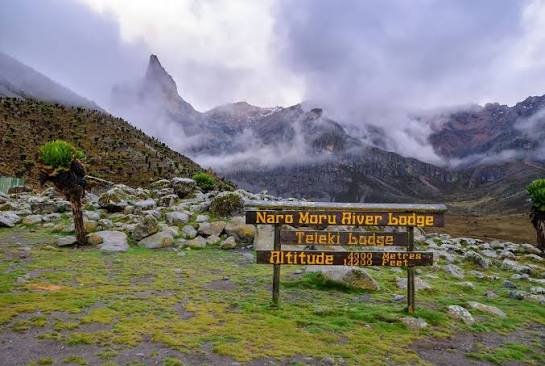
Mount Kenya , A Climber’s Guide : Mount Kenya is the second highest mountain in Africa sited on a height of 5,199meter with point Lenana sited on 4,985 meters (16,355 ft), being the Guest’s main goal and point to conquer. Reaching the peak/summit of Mount Kenya, is a reward to determination resilience and endurance for the formidable challenging task.
Peaks at Mount Kenya
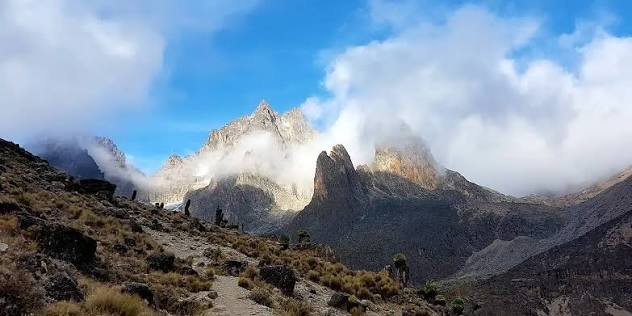
Batian Summit. Sited on the height of 5,199 meters (17,057 feet), this is the highest peak on Mount Kenya. It is the most difficult peaks to trek and requires extremely advanced hiking skills. The peak is characterized of permanent snow, bare rocks, ice fields and freezing temperatures and all these make it inhospitable for any life growth. Its steepness and rugged nature makes it difficult to hike and this had made it less popular summit to hike despites being the second highest mountain in Africa.
Nelion Summit: This is the second highest peak sited on 5,188 meters (17,028 feet). This peak also requires advanced hiking skills. As part of the three primary summits of Mount Kenya, Nelion summit is a notable landmark of the dormant volcano portrayed with pyramidal peaks, made of crystalline nepheline syenite. Sited on 5,188 meter above the sea-level, the summit is characterized of extreme cold, ice rocks and barren landscape supporting no vegetation.
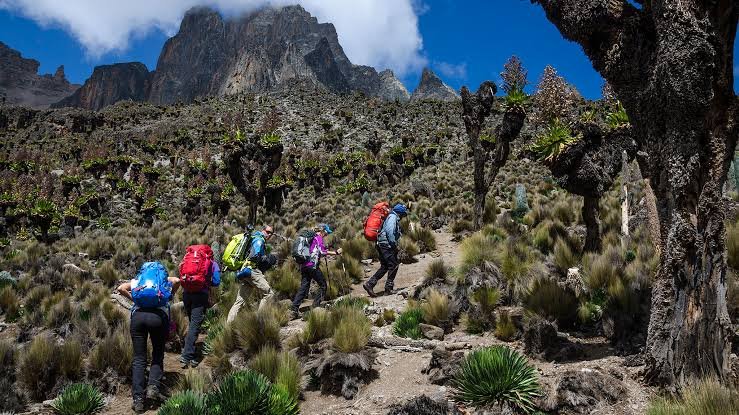
Point Lenana. This the most accessible and easiest peak to trek with a height of 4,985 meters (16,355 ft). Being the lowest peak, it is accessible to regular hikers and it’s the most visited summit. This point has got several routes and those are Sirimon route, Chogoria route Naro Moru route, Burguret route, Timau route, Kamweti route.
Sirimon Route: This is charactered of drier scenic path featuring various wildlife and gradual slopes and it takes 4-5 days to trek.
Naro Moru Route: This is the shortest, direct and fastest route taking 3-4 days to hike. Despite being the shortest and fastest route it is more demanding and requires extremely fit and experienced high-altitude hikers.
Chogoria Route: Among the other routes, this takes many days to hike of 5-6days and its famous for gorgeous waterfalls, lakes and dazzling gorges
Kamweti route: This passes through the sountern slope featuring dense rain forest waterfalls, thick giant bamboo zones, Kiringa and Thegu rivers, golden moorlands and the alpine desert. This one of the challenging routes to use because it more used by wildlife than humans and has faint and uncleared tracks.
Best time to hike Mount Kenya
Despite the factor that one can visit Mount Kenya any time of the year, the best time to hike this spectacular mountain is during the dry season months of June July August to October. During this period there are less or no rains making the hiking a bit easier and the mountain accessible. Another opening come in during the month of Dec, Jan Feb and March. These are characterized with a combination of sunny days and rainy day. In this period there is also bigger crowds and gives a chance to interact and join other hikers. Despite the fact that these months are dry, always carry waterproof clothes because the weather is unpredictable.
The other season to visit Mount Kenya is during the rainy season months of April, May and November, however this period is characterised of heavy rains, less crowds and friendly prices.
Things to know before you hike Mount Kenya
Physical fitness and health: For one to hike Mount Kenya one has to be physically fit and in a good health position to hike this mount. And for those interested in extremely challenging summits like Batian and Nelion summit one required extremely advanced hiking skills. Also share your health requirement with your tour consult to avoid any unforeseen circumstances that may occur during the adventure.
Documentation: Always carry all necessary documents like your passport hat is valid for 6 months from the date of travel, visa that will allow you enter Kenya, hiking certificates in available, and a copy of your medical documents Also hiking permit from your service provider.
The Dos and Don’ts of Hiking Mount Kenya
Dos
- Follow your guide’s instructions
- Stay away from any prohibited areas
- Always use designed routes in the park (avoid off tracks)
- Respect nature-Keep distance from any wildlife
- Always pack ssynthetics or wool clothes
Don’ts
- Don’t ignore any altitude sickness symptoms
- Avoid cotton clothes. These hold moisture and make you cold
- Never hike alone. Also join a group and make sure you are with a guide
- Avoid colored clothes
- Don’t use any sedatives or drink alcohol during hiking. These can make breathing difficult and worsen high altitude effects.
- Don’t wear brand new boots. Avoid wearing un-broken-in footwear on the mountain.
What to carry for your hike?
Clothes
- Neutral colored clothes: In colors like green, olive, tan and khaki. Avoid bright colored clothes that can attract insects and bugs.
- Long sleeved: For comfortability and they protect you from insect bites.
- Rain Gears: Poncho or Lightweight waterproof jacket and trousers
- Water proof Shoes: like Trail shoes and Lightweight Hiking Boots
- Warm hats.
- Trekking poles
Toiletries and Medical Prescriptions
- Sunscreen; To protect you from scotching sun of Africa.
- Masks: To avoid spreading human diseases to wildlife.
- Insect sprays: To protect you from insect bites.
- vaccinations: Consult with your medical personal for vaccinations you may need.
- Wipes: To keep you wet and for cleaning.
Gears and Electronics
- Binoculars
- Universal Plug Adapter
- Power Bank
- Non flashy Cameras
- Head lamp
Why you should choose us
As jewel safaris we are dedicated to providing a seamless and unforgettable adventure of a life time, don’t just read about it, experience it first hand with our experienced team. Book your next adventure with us today.