
Which animals are you likely to see on a safari in Kenya?
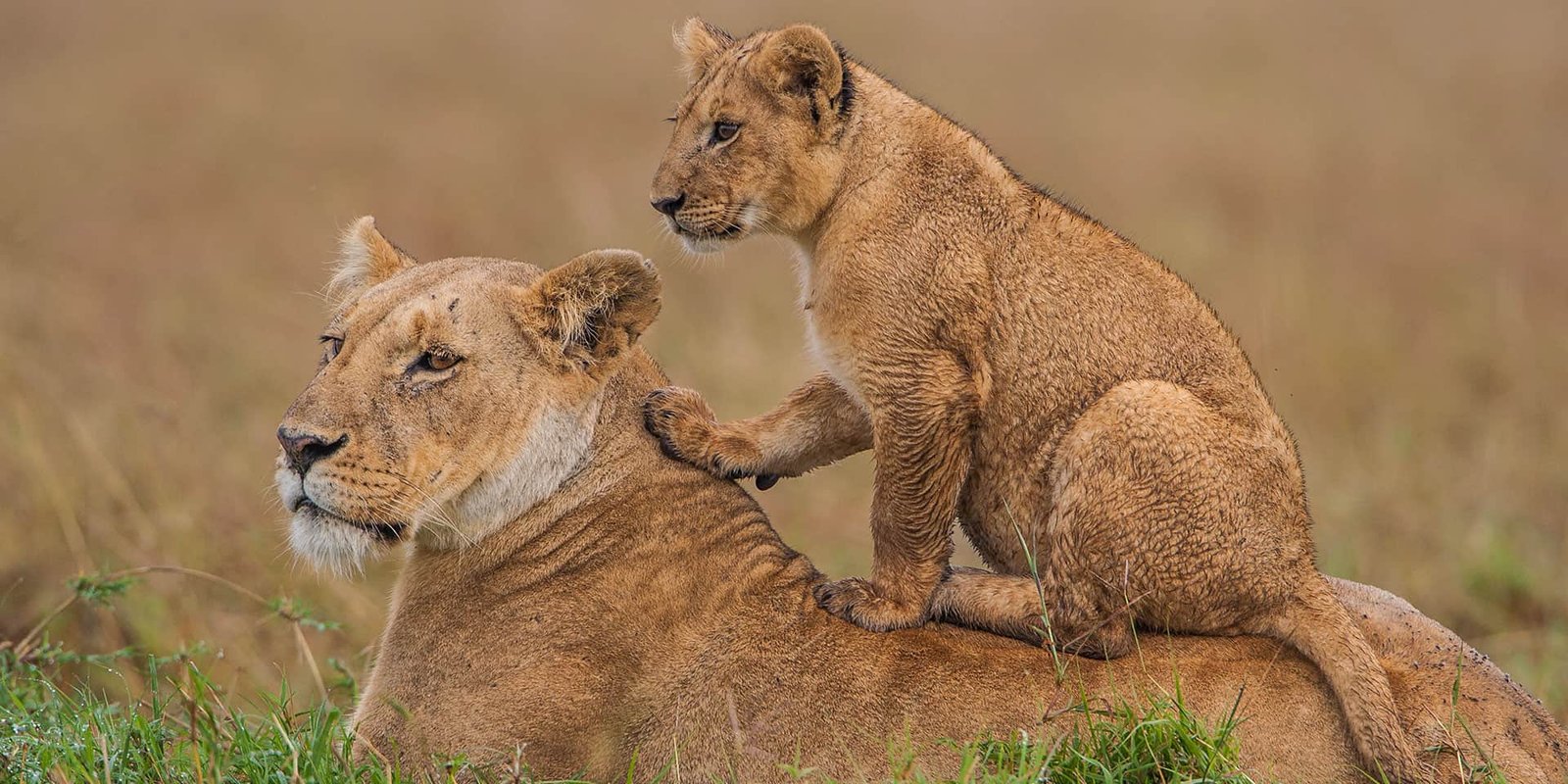
Which animals are you likely to see on a safari in Kenya? : Lions (Panthera leo): Lion the “king of the jungle” is a large cat of the genus Panthera. Its known for its broad-chested muscular body, with round ear, head with a hairy tuff at the tip of its tail. It is commonly found in the Sub- Saharan African countries like Kenya, Tanzania, Uganda Zambia, Zimbabwe, Namibia, South Africa etc. With a life span for 10-16yrs of an adult female in the wild and 8-10yrs for an adult male in the wild, lions are the only truly social big cats, living in a family called pride that consist of 15 to 40 members. Lions use their roar to communicate with other lions and to mark their territory. Their powerful roar can reach 114 decibels and be heard is about 8kilometer. They are also know has the lazy Kings because they spend most of their day sleeping about 16-20hrs to preserve their energy. While male lions defend the pride’s territory, the females (lionesses) do the vast majority of the hunting. Kenya has got about 2500-2600 lions in the wild in National Parks like Masai Mara National Reserve, Amboseli National Paark, Tsavo East and West National Parks
Elephants (Loxodonta Africana): Elephants are known as the largest living Land mammals with a gestation period of 22 months and the only land mammal that cannot jump. Elephants have got about 40,000 muscles in their trunk allowing them to carry/lift any heavy object and delicately sensitive enough to pick a single blade of grass. Elephants show self-awareness by displaying mourning behaviors as they gather together to grief for the deceased herd members. Also through their feet they are able to detect low frequency seismic vibrations enabling them to communicate across great distances and detect approaching danger from miles away.
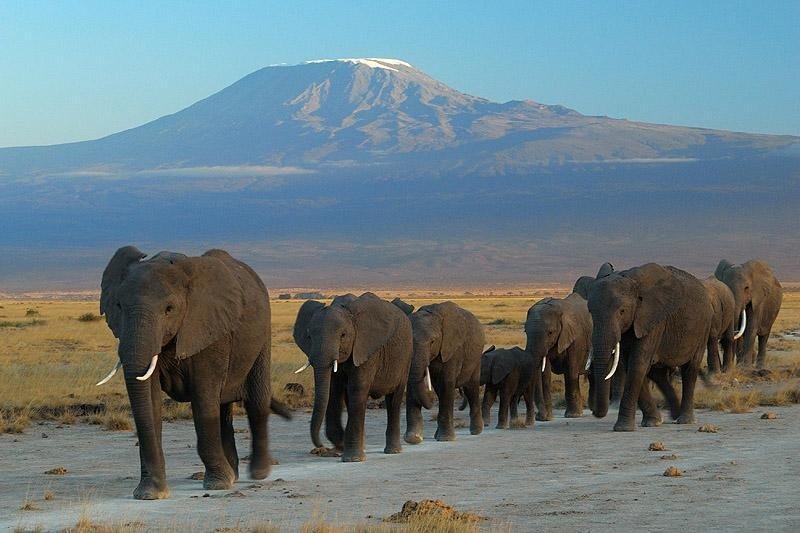
Elephants live in a family/Herd/Parade of about 8-100 members this is greatly determined by the availability of pasture and water. The bulls (Adult male Elephant) from age 14 live the herd and start living in small bachelor group or alone.
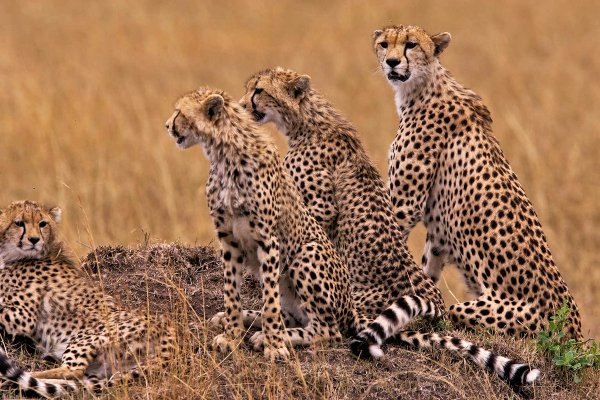
Cheetahs (Acinonyx jubatus): Cheetahs are the fastest land mammals running about 93-104km/hr. They are known as pursuit predators with a tawny to creamy white pale buff fur with solid black spots. They live in 3 main groups and that’s the female and their cubs, the male coalitions (this gives they an advantage against their enemies) and lastly the solitary males (That live alone). Cheetahs are listed under the IUCN red list because they are threatened by extinction and competition from predators like lions and also human encroachment. In Kenya cheetahs are found in places like Masai Mara National Reserve, Reserve, Amboseli National Paark, Tsavo East and West National Parks and Samburu National Park
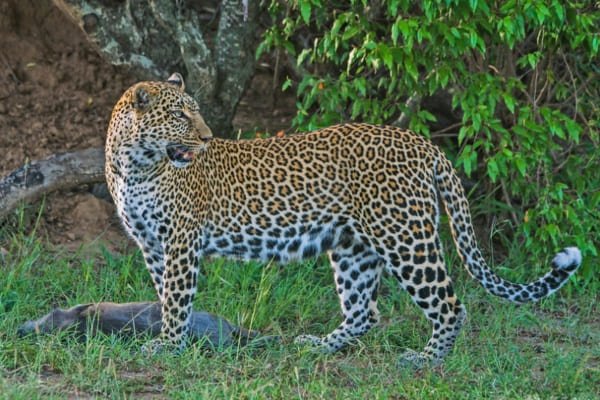
Leopards (Panthera Pardus): Are the most solitary animals from a pale yellowish to dark golden fur with dark spots. They usually have a slender body, females weighing 20-43kg and males weighing 30-72kg. It is also known as an opportunistic predator hunting mostly ungulates and primates. It also uses its spotted pattern for camouflage and to lay ambushes for its prey and its strong and comfortable in trees. The leopards both Females and males reach a sexual maturity at 2-3yrs and living up to 12-17years. Females give birth to 2-4cubs once in 15-24months.
Buffalos (Syncerus caffer): These are large hoofed mammals from the bovine family. It is one of Africa’s Big Five and they include the Cape Buffaloes and Forest Buffaloes. They are powerful herbivores known for their sharp, curved horns and strong herd behaviour. Buffalos weight about 600-2000 pound and standup up to 6 feets tall. From the center of their head, buffaloes have horns that form a protective shield called a boss. Their unpredictable and aggressive character earned them local names like “black Death” and they live in large herds of bout 50-100members.
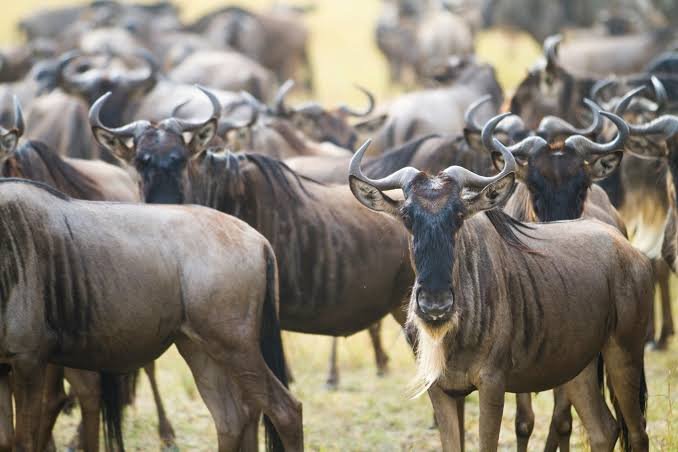
Wildebeests (Disambiguation): Also know as the gnus are herbivorous hoofed animals from the Bovidae family. They have a bovine face that resembles that of a cow, with a short neck and sloping shoulders with a hump. There are 2 main types of wildebeests and that is the white-tailed wildebeest (connochaetes taurinus) and the black wildebeest (connochaetes gnou). Weighing about 500-600 pound, the wildebeests have a knee sense to danger that signals are usually depicted from other animals like baboons. They graze in large herds mixed with zebras and this helps protect they from predators and this makes them one of the highly social animals. An adult female wildebeest has a gestation period of 8 months.
Giraffes (Genus Giraffa): These are the tallest hoofed mammals on earth and modern-day Brachiosaurus standing up to 5.7 meters tall featuring along dark tongue with seven neck bones same as that of humans. Their unique spot pattern act like human fingerprints and differ from one another. Giraffes feed on tree leaves from acacia leaves, twigs and shoots and usually get their water from them making them barely take water from rivers unless its required. A group of giraffes is called a tower. You can also call them a journey when they are moving.
Hippopotamus (Hippopotamus amphibius): Hippos are massive, semi-aquatic African mammals that weigh up to 4.5 tons. Their name comes from an ancient Greek word meaning “river horse”. Despite looking chubby and slow, they are the third-largest land mammals and can run up to 22 mph, they also produce a natural red sunscreen. A group of hippos is called a pod and there are two species of hippopotamuses, the common river hippopotamus (Hippopotamus amphibious) and the smaller pygmy hippopotamus (Choeropsis liberiensis).
Other animals that can be spotted include Nilekeny crocodiles, Zebra, Aardvark, Banded Mongoose, Oribi, Spotted Hyena, Gazelle, olive baboons, Aardwolf, Antelopes, Bat eared fox, Bush baby, Chimpanzee, Common Eland, Red tailed monkey, Honey Badger, Impala, Pangolin and many others.